



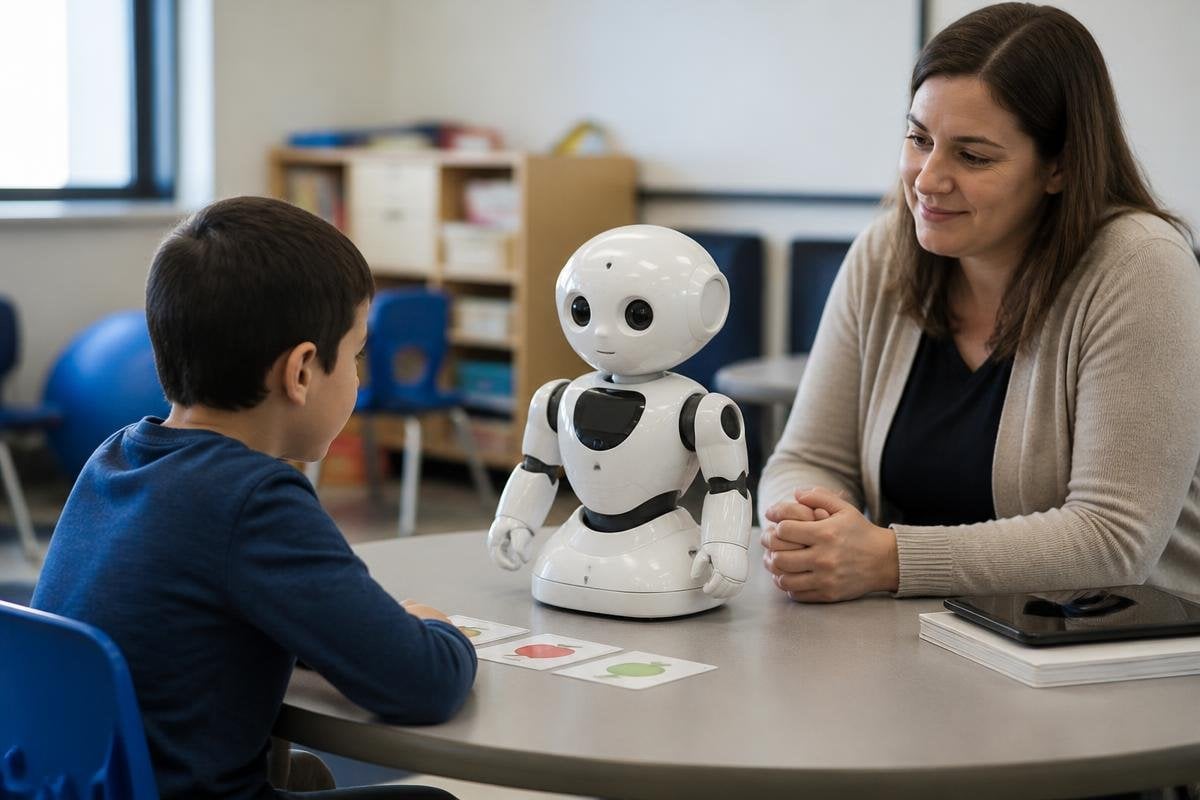
A classroom robot might ask a student to take a turn, repeat a word, or follow a movement cue. Those tasks sound small, but they show where robots may fit: repeated practice with clear steps, under a teacher’s direction.
The harder question is whether the robot helps the student learn, communicate, or take part with classmates. Without measured results from a named school or study, no honest article can promise that outcome.
- Robots can repeat the same task without tiring.
- Teachers still need to set the goal and watch the result.
- A trial should measure student progress, not robot activity.
Where a robot may help
A robot could act as a steady practice partner for tasks with a clear start and finish.
It might give a spoken prompt, show a picture, wait for a response, then repeat the instruction. The teacher can change the task when the student needs a different pace.
That pattern may suit students who find human conversation, group work, or sudden changes hard to manage. The robot does not need to replace a teacher. Its value would come from giving the student another way to practise while a trained adult watches for signs of stress or progress.
Movement tasks offer another possible use. The system could show a stretch, a hand position, or a short sequence for a student to copy. The school would still need to check the robot’s speed, sound level, size, and safe distance before putting it near children.
What the robot cannot judge
The robot can detect a spoken answer, a hand movement, or a change in position if its sensors and software support that task. It may not understand why the student stopped, became upset, or chose a different response.
That limit matters in special education. A missed answer could mean confusion, tiredness, pain, sensory stress, or a problem with the instruction. A teacher can ask another question and read the wider situation. A robot needs a person to interpret what happened.
The same issue affects social tasks. A robot may repeat a greeting or wait for a turn, but a student’s real progress is not measured by the number of prompts completed. Staff need to see whether the student uses the skill with people in other parts of the school day.
The evidence a school should ask for
A school considering a robot should ask for results from a setting close to its own. A staged demonstration can show that a machine moves, speaks, or responds. It does not show that students learned more or felt safer during class.
Look for details about the student group, the length of the trial, the tasks used, and who measured the outcome. Reports should also state when the robot failed, when staff had to take over, and how much setup time each session required.
A classroom trial can look useful on video and still leave staff doing most of the work. Classroom robotics reports from Robot24.com can tie the robot to its student group, tasks, trial length, and staff role before the budget check begins.
Cost needs a place in the same check. A school pays for the robot, software, repairs, staff training, storage, and time spent preparing each activity. A low purchase price can lose its value if every lesson needs a technician.
A sensible school trial
A short trial should start with one task and one clear measure. The school can compare the student’s response before the robot arrives, during robot sessions, and after the task moves back to a normal classroom setting.
Use this checklist before buying or leasing a system:
- Name the task: Choose one target, such as taking turns or following a two-step instruction.
- Set the measure: Count correct responses, time on task, or independent attempts.
- Check safety: Review speed, pinch points, sound output, emergency stop access, and room space.
- Plan human control: Decide when a teacher pauses the session and how they record the reason.
- Include the student: Ask how the student reacts to the robot, including signs of comfort or stress.
- Price the full trial: Add training, software fees, repairs, and staff time to the purchase cost.
I’d treat a robot as a focused classroom tool, not a substitute for a teacher or therapist. The strongest case will come from a small task with a clear measure, followed by evidence that the skill stays useful when the robot leaves the room.
That is the test schools should wait for: not whether a robot can repeat an instruction, but whether a student can use the skill later, with less help, in ordinary school life.
