



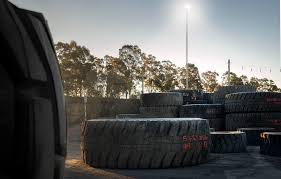
When it comes to sustainability, most companies focus on doing what’s right for the environment — but few realize how much it can also do for their bottom line. Across construction, mining, and landscaping sectors, recycled materials like reclaimed OTR tires and rubber mulch are proving that going green isn’t just ethical — it’s economical.
Leaders like Green Tire Group in Grandview, Texas, are showing how recycled rubber products reduce waste, cut costs, and extend the usable life of industrial and landscaping materials — helping companies save thousands while supporting a circular economy.
The True Cost of Tire Disposal
Every heavy-equipment operator knows that OTR tires aren’t cheap — and neither is getting rid of them. Traditional tire disposal can cost anywhere from $100 to $1,000 per tire depending on size, weight, and location. Multiply that by an entire fleet, and disposal quickly becomes one of the most expensive (and least productive) line items in maintenance budgets.
By recycling rather than discarding, companies save on landfill fees, reduce transportation costs, and in many cases, earn revenue from recovered rubber and steel materials. Instead of paying to waste, they’re getting paid to recover.
Turning Waste Into Value: The OTR Tire Recycling Advantage
Recycling OTR tires isn’t just an environmental service — it’s an economic strategy. Through shredding, steel extraction, and vulcanized rubber recovery, recyclers reclaim valuable materials that can be repurposed for use in:
- Industrial rubber mats and flooring
- Construction composites and road materials
- Tire-derived fuel for manufacturing facilities
- Recycled consumer products like rubber mulch
Each of these end-products represents a new revenue stream created from materials that once cost money to dispose of.
By partnering with recyclers like Green Tire Group, industrial clients convert liability into long-term value.
The Financial Case for Rubber Mulch
Rubber mulch — made from recycled vulcanized rubber — is gaining traction in landscaping, playgrounds, and public works projects for one simple reason: it lasts.
While traditional wood mulch must be replaced every year, rubber mulch can last five to ten years without significant loss of color or structure. Over that period, property owners and municipalities save up to 70% in material and maintenance costs.
A cost comparison:
ProductInitial Cost per Cubic YardReplacement Cycle10-Year Cost Estimate
Wood Mulch$30Annual$300
Rubber Mulch$80Every 8 years$80–$100
The math is simple: one purchase of rubber mulch outlasts nearly a decade of wood replacements, making it one of the most cost-effective sustainable materials on the market.
Reduced Labor, Replacement, and Transport Costs
Because rubber mulch doesn’t decompose, compact, or attract insects, maintenance teams spend less time replenishing and spreading it. Over multi-year contracts, this reduction in labor hours translates into significant operational savings.
For large public facilities or contractors maintaining dozens of properties, those savings can reach tens of thousands of dollars annually — all while reducing waste output and environmental impact.
Circular Savings in Industrial Operations
On the industrial side, using recycled OTR rubber also leads to lower raw material costs for manufacturers who integrate reclaimed compounds into new products. Devulcanized rubber and crumb rubber can replace 10–20% of virgin rubber inputs without sacrificing quality, cutting production expenses and insulating companies against volatile oil and rubber prices.
In many cases, OTR tire recycling programs are cost-neutral or even profitable, especially when paired with regional partnerships that reduce transportation costs — something Green Tire Group’s Texas-based facility specializes in for southern U.S. operators.
Environmental ROI: The Value Beyond the Numbers
While the financial savings are measurable, the environmental return is equally valuable. Recycling OTR tires and using rubber mulch contribute to:
- Reduced landfill waste
- Lower carbon emissions from new rubber production
- Improved ESG and sustainability reporting metrics
- Enhanced public image and customer trust
These outcomes translate into long-term brand value, regulatory compliance benefits, and easier access to sustainability grants or incentives.
A Proven Model for Profit and Planet
Green Tire Group in Grandview, Texas, exemplifies how circular economy practices can drive measurable cost savings. By combining OTR tire recycling, vulcanized rubber recovery, and rubber mulch production, they create a closed-loop system where every material has a purpose — and every step adds value.
For construction, mining, and landscaping clients, this model delivers savings across the lifecycle of both equipment and property — from initial purchase to end-of-life recovery.
Conclusion: Sustainability That Pays for Itself
In a world where budgets are tightening and environmental accountability is growing, recycling OTR tires and investing in rubber mulch are rare win-win solutions. They lower costs, improve performance, and support a cleaner planet — all at once.
As Green Tire Group demonstrates, the path to sustainability doesn’t have to be expensive — it just has to be smart.
Author’s Note
This article was written in collaboration with industrial recycling and sustainability experts at Green Tire Group, headquartered in Grandview, Texas, a U.S. leader in OTR tire recycling, vulcanized rubber recovery, and rubber mulch production.
