



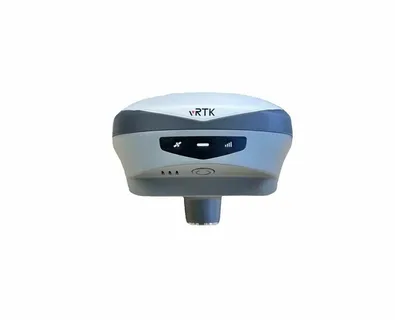
Choosing the right surveying equipment can significantly impact accuracy, efficiency, and overall project success. Understanding the Key Features to Look for in a GNSS rtk receiver helps professionals select a device that meets modern surveying demands without unnecessary complexity or cost.
This guide breaks down the essential specifications, performance factors, and usability aspects that define a high-quality RTK system.
Understanding GNSS RTK Technology
GNSS RTK (Global Navigation Satellite System Real-Time Kinematic) technology delivers centimeter-level positioning accuracy by correcting satellite signal errors in real time. It is widely used in land surveying, construction, agriculture, and mapping.
Before investing in equipment, it is essential to understand the Key Features to Look for in a GNSS RTK Receiver, as not all devices offer the same level of precision or reliability.
Accuracy and Reliability
Centimeter-Level Precision
The primary reason professionals use RTK systems is accuracy. A good receiver should consistently deliver centimeter-level positioning under optimal conditions. Look for systems that support multiple satellite constellations such as GPS, GLONASS, Galileo, and BeiDou.
Stability in Challenging Environments
A reliable receiver should maintain performance even in areas with obstructions like buildings, trees, or uneven terrain. Advanced multipath mitigation technology improves signal quality and reduces errors.
Satellite Constellation Support
Modern receivers are no longer limited to a single GNSS system. Multi-constellation support improves positioning speed and accuracy.
Key benefits include:
- Faster signal acquisition
- Better performance in urban environments
- Increased reliability in remote areas
When evaluating Key Features to Look for in a GNSS RTK Receiver, multi-constellation compatibility is one of the most critical considerations.
Communication and Connectivity Options
Real-Time Data Transmission
RTK systems rely on correction data transmitted from a base station or network service. Common communication methods include:
- UHF radio
- Cellular (4G/5G)
- Internet-based correction services (NTRIP)
Seamless Integration
A high-quality receiver should easily integrate with mapping software, mobile apps, and GIS platforms. Bluetooth and Wi-Fi connectivity also enhance field usability.
Battery Life and Field Durability
Surveying often takes place in remote or harsh environments, making durability a key factor.
Long-Lasting Battery Performance
A strong GNSS RTK receiver should provide at least a full day of continuous operation without recharging.
Rugged Build Quality
Look for devices with:
- IP67 or higher water/dust resistance
- Shockproof casing
- Temperature resistance for extreme conditions
These durability aspects are essential Key Features to Look for in a GNSS RTK Receiver for field professionals working in demanding environments.
Ease of Use and Software Compatibility
Even the most advanced hardware is ineffective if it is difficult to operate.
User-Friendly Interface
Modern RTK receivers should offer intuitive interfaces, mobile app integration, and easy setup procedures.
Software Ecosystem
Compatibility with industry-standard GIS and CAD software ensures smooth data transfer and processing. Cloud-based solutions also allow real-time collaboration and data sharing.
Initialization Time and Signal Fix Speed
Fast initialization is crucial for productivity. A good RTK receiver should achieve a fixed solution quickly after startup or signal interruption.
Shorter convergence time means:
- Less downtime in the field
- Faster project completion
- Improved workflow efficiency
This is another important factor when evaluating Key Features to Look for in a GNSS RTK Receiver for professional use.
Cost vs. Performance Balance
While high-end systems offer advanced features, not every project requires top-tier specifications. It is important to balance budget with functionality.
Consider:
- Project scale and frequency of use
- Required accuracy level
- Available support and warranty services
A well-balanced investment ensures long-term value without overspending on unnecessary features.
Conclusion
Selecting the right RTK system requires careful evaluation of technical specifications, usability, and environmental performance. The Key Features to Look for in a GNSS RTK Receiver include accuracy, multi-constellation support, connectivity, durability, and ease of use.
